Your Dog Drank From a Puddle. Should You Be Worried?
The Hidden Monsoon Risk Pet Parents Often Miss
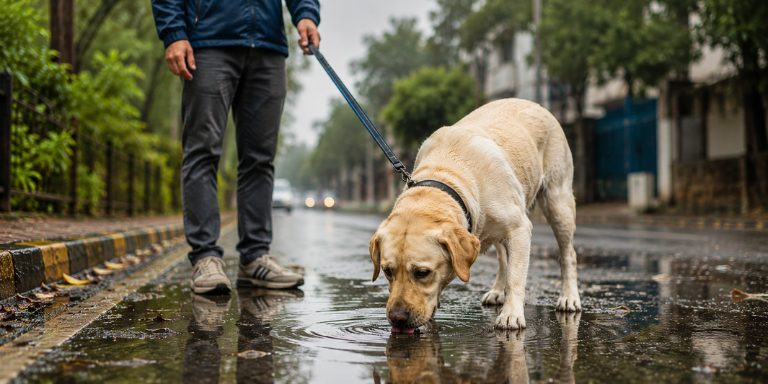
The rain finally arrives, your dog gets excited, and suddenly every puddle on the street becomes an interesting drinking spot. You pull them away when you can. But sometimes, it is too late. The monsoon brings more than muddy paws and wet fur. Standing water, waterlogged streets and contaminated puddles can expose pets to bacteria that may cause serious
illness.
One of the lesser-known concerns is leptospirosis—a bacterial infection caused by Leptospira. The bacteria can be present in water or soil contaminated with the urine of infected animals, particularly rodents. During heavy rains and flooding, contaminated water can spread more easily.
And the worrying part?
Your pet may not look seriously ill in the beginning.
Why It Can Be High-Risk?
A dog does not necessarily have to drink the water to be exposed. Contaminated water can come into contact with cuts or damaged skin, and dogs may also ingest organisms while licking wet paws after a walk.
This makes the simple “walk → puddle → lick paws” routine something worth taking seriously.
Leptospirosis is particularly concerning because it can affect important organs, including the kidneys. A pet may initially show signs that seem unrelated to kidney health:
- Loss of appetite.
- Lethargy.
- Vomiting.
- Increased thirst.
- Changes in urination.
- Fever.
These symptoms can easily be mistaken for a stomach upset, heat-related weakness or a temporary infection. But when kidney involvement occurs, the situation can become much more serious. That is why waiting for your pet to look severely sick is not a good monsoon strategy.
What Should Pet Parents Actually Watch For?
After possible exposure to contaminated water, pay attention to unusual changes such as:
1. Drinking much more water
A sudden increase in thirst shouldn’t automatically be blamed on the weather.
2. Changes in urination
Notice whether your pet is urinating more frequently, producing unusual amounts of urine, struggling to urinate, or showing a noticeable change from their normal routine.
3. Sudden loss of appetite
Skipping one meal may not always be significant, but persistent appetite loss—especially with vomiting, fever or lethargy—needs veterinary attention.
4. Unusual tiredness
If your normally active dog suddenly seems withdrawn, weak or unwilling to go for a walk, don’t simply assume they are tired from the rain.
5. Vomiting or diarrhoea
Digestive symptoms can have many causes, but when they occur alongside fever, weakness or urinary changes, they warrant closer attention.
Here’s What Many Pet Parents Don’t Know
A normal-looking pet does not necessarily mean everything is normal internally. Some health problems begin with subtle changes that are easy to miss at home. This is where diagnostic testing becomes important.
Depending on your veterinarian’s assessment, blood and urine testing can provide valuable information about kidney health and help investigate changes associated with illness.
Urine analysis, for example, can provide clues about urine concentration, protein, blood, cells and other abnormalities. When combined with appropriate blood tests and clinical examination, these findings can help your veterinarian build a clearer picture of what is happening inside your pet.
What Should You Do After a Puddle Exposure?
Don’t panic if your pet accidentally steps into or drinks from a puddle.
Instead:
1. Prevent further exposure.
Keep your pet away from stagnant and potentially contaminated water.
2. Clean the paws.
Wash and thoroughly dry the paws after outdoor walks.
3. Don’t ignore unusual symptoms.
Watch for changes in appetite, energy, drinking, urination, vomiting or fever.
4. Check vaccination status.
Speak to your veterinarian about whether your pet’s leptospirosis vaccination is appropriate
and up to date.
5. Test when your veterinarian recommends it.
If your pet develops concerning symptoms or has significant exposure, your veterinarian may recommend blood and/or urine testing to investigate possible organ involvement.
So this monsoon, don’t just watch where your pet walks. Watch what changes afterwards. Because when it comes to diseases that can affect the kidneys, early attention can make a very important difference.