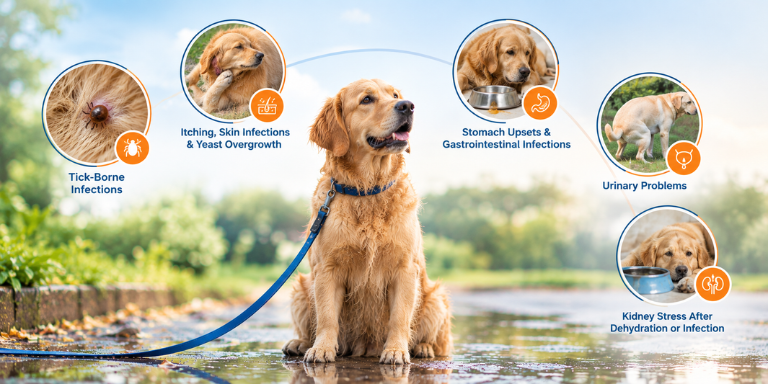

Why Heatstroke in Pets Can Turn Dangerous Faster Than You Think
As Delhi temperatures soar above 40°C in June, heatstroke becomes one of the biggest seasonal threats to pets. Unlike humans, dogs and cats cannot cool themselves efficiently, making them highly vulnerable to overheating.
What Causes Heatstroke in Pets?
Heatstroke occurs when a pet’s body temperature rises faster than it can cool down. Common triggers include:
● Walking during peak afternoon heat
● Poor ventilation
● Lack of access to fresh water
● High humidity
● Being left in parked vehicles
What Are the Early Signs of Heatstroke?
Many pet parents miss the early warning signs, including:
● Excessive panting
● Increased thirst
● Drooling
● Weakness or lethargy
● Seeking cool surfaces
If ignored, symptoms can quickly progress to vomiting, collapse, seizures, and even organ failure.
Which Pets Are Most at Risk?
Heatstroke is more common in:
● Pugs, Bulldogs, and other flat-faced breeds
● Senior pets
● Overweight pets
● Thick-coated dogs
● Pets with heart or respiratory conditions
Can Heatstroke Affect Internal Organs?
Yes. Severe heat can impact:
● Kidneys
● Liver
● Heart
● Electrolyte balance
This is why diagnostic testing is often recommended for pets showing signs of heat stress.
What Tests Can Help?
Veterinarians may suggest:
● Complete Blood Count (CBC)
● Kidney Function Tests
● Liver Function Tests
● Electrolyte Profile
● Urine Analysis
These tests help identify dehydration and organ stress before complications become severe.
How Can You Prevent Heatstroke for Your Pet?
● Walk pets early morning or after sunset
● Provide constant access to fresh water
● Avoid hot pavements
● Ensure cool, shaded resting areas
● Never leave pets in parked cars
When Should You Visit a Vet Immediately?
Seek veterinary attention if your pet shows:
● Continuous heavy panting
● Vomiting
● Difficulty standing
● Refusal to drink water
● Collapse or seizures
Heatstroke can become life-threatening within hours. Early recognition and timely diagnostic testing can help detect hidden organ damage and improve recovery outcomes.