Pet Allergy Test

Pet Allergy Test

The most common type of allergy in pets is atopic dermatitis: a type I or direct-type hypersensitive reaction to inhalation allergens, such as pollen and mites.

Allergy In Dogs

Canine atopic dermatitis (CAD) is thought to be the most common form of allergy in dogs, affecting up to 15% of the dog population and accounting for 25% of dogs referred for pruritus. Atopic dermatitis is a hereditary allergy whereby the dog is sensitive to airborne substances from the environment, such as pollens, mites, moulds and dander.

Allergy In Cats

In cats the most common types of allergies are flea allergy and atopic dermatitis. Atopic dermatitis or feline atopy is a hereditary allergy whereby the animal is sensitive to airborne substances from the environment, such as pollens, mites, moulds and dander.

A complex condition

Allergy is a genetically predisposed condition of hypersensitivity to substances that are common and harmless to most animals. The immunological mechanisms underlying allergy in dogs, cats and horses are essentially the same as in humans.

Atopy or Atopic Dermatitis

Atopy or atopic dermatitis Hypersensitivity to pollen, mites, moulds and dander

Food Allergy

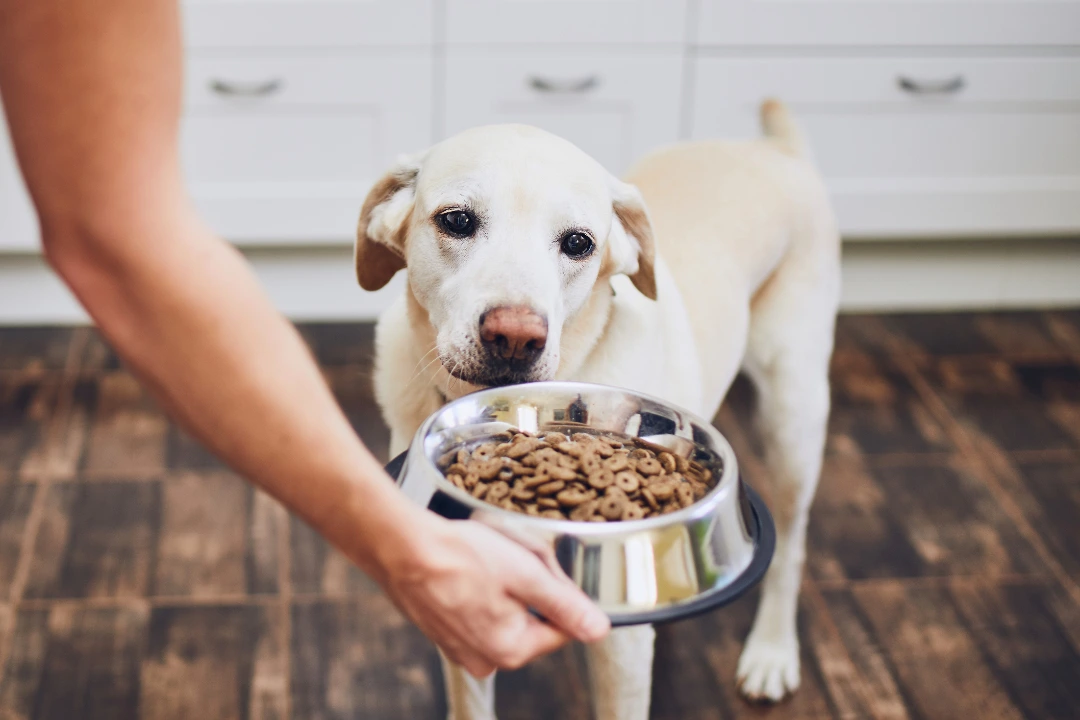
Food allergy: Hypersensitivity to protein components of the diet, such as chicken

Insect and Flea Allergy

Insect and flea allergy: Hypersensitivity to insect and flea saliva

Contact Allergy

Contact allergy: Hypersensitivity to materials such as plastic, linoleum and paint

01

Pathogenesis

Hypersensitivity is caused by a dysfunction in the animal’s immune system whereby the immune system incorrectly perceives a harmless substance as harmful. When an animal is in contact (physically or through inhalation or ingestion) with an allergen for the first time, its immune system will react by producing IgE antibodies.
These antibodies are specific for a particular allergen. When the animal encounters the allergen again, the allergen will be presented to a mast cell which is already connected to allergen-specific IgE. This leads to the production and release of undesirable inflammatory mediators such as histamine and cytokines.

02

Clinical symptoms

Hypersensitivity is caused by a dysfunction in the animal’s immune system whereby the immune system incorrectly perceives a harmless substance as harmful. When an animal is in contact (physically or through inhalation or ingestion) with an allergen for the first time, its immune system will react by producing IgE antibodies.
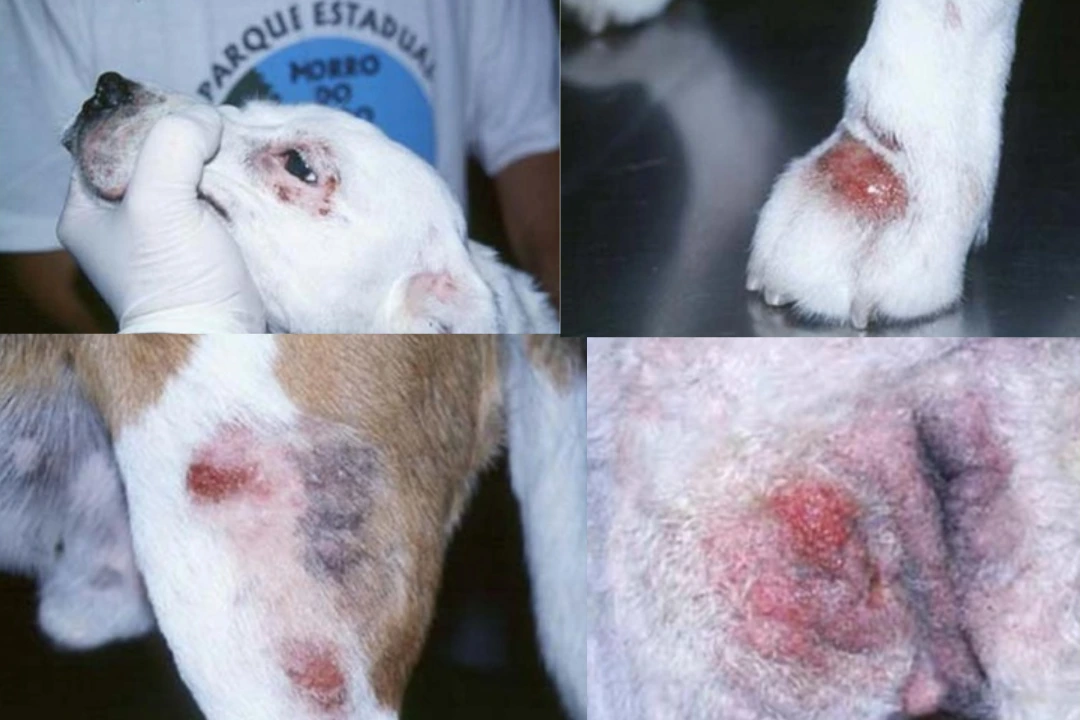
Pruritus is an essential feature of allergy – its diagnosis therefore requires a history of itching. Cutaneous lesions such as erythema, excoriations and self-induced alopecia also relate to the severity of the disease.
Respiratory symptoms (allergic rhinitis, asthma), gastrointestinal symptoms (vomiting, diarrhoea, gastritis) and ocular symptoms (conjunctivitis) may also appear. Reduced quality of life – for both pets and owners – is an outcome that has an impact not only on the health and wellbeing of the pet, but also on the human–animal bond.


Allergy Diagnosis

An accurate allergy diagnosis requires thorough physical examination including a complete clinical history. All other known causes of itching, such as parasites and infections, must be treated or ruled out before allergy can be diagnosed.

VETLAB in Association with Nextmune Vet USA Providing Five Panels Test

Select Test You Want To Perfumed
PricePackage NameEnroll
INR 9500/-PAX Molecular Allergy Test Pet Food
INR 20000/-PAX Molecular Allergy Test - Complete Panel
INR 17000/-PAX Molecular Allergy Test - Food Panel
INR 14500/-PAX Molecular Allergy Test - Environmental Panel
INR 14500/-PAX Molecular Allergy Test - PAX Insect & Venom Panel
INR 5500/-PAX Molecular Allergy Test - Add-On Allergen
NR 5500/-PAX Molecular Allergy TestPet Spot Platinum

Results

The results of allergen-specific immunotherapy: a significant improvement (>50%) of the clinical signs occurs in the course of time in 75% of the treated animals; it is assumed in this respect that any pyodermatitis (skin infection) and/or seborrhea (dry form of excessive secretion of sebum mixed with flakes of the skin) is treated simultaneously¹.

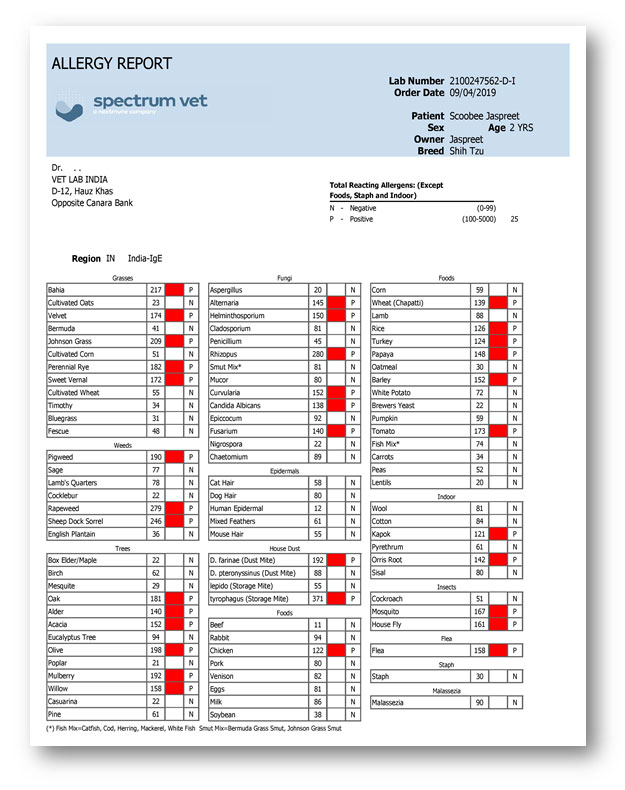
Pet Spot Platinum Allergy Test- 91 Allergens

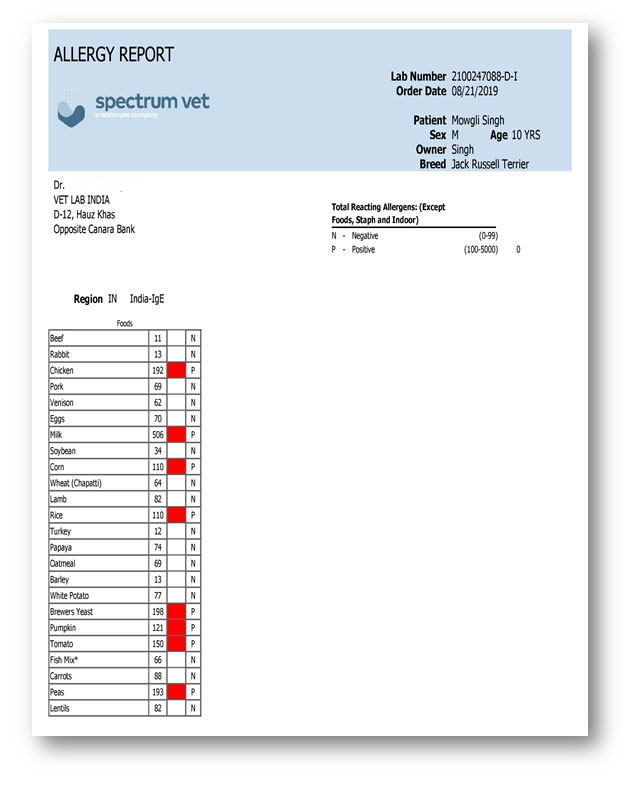
Pet Food Allergy Panel- 24 Allergens

Have a Question?
Talk to Us!

If you have any questions or would like to learn more about our diagnostic services for companion animals, please fill out our Contact Form or call us directly at 011-66-448-448 for prompt assistance and expert support.

Fill Up the Enquiry Form